
Chapter 0
Introduction
What rational tarot means, and how to read this book.
What is rational tarot?
You don't need to believe in magic to use tarot. You don't need to be psychic or believe that cards predict a fixed future. Rational tarot treats the deck as a psychological tool. It's a mirror for your own mind. When you pull a card, you aren't receiving a message from the ether. You're sparking a conversation with your subconscious.
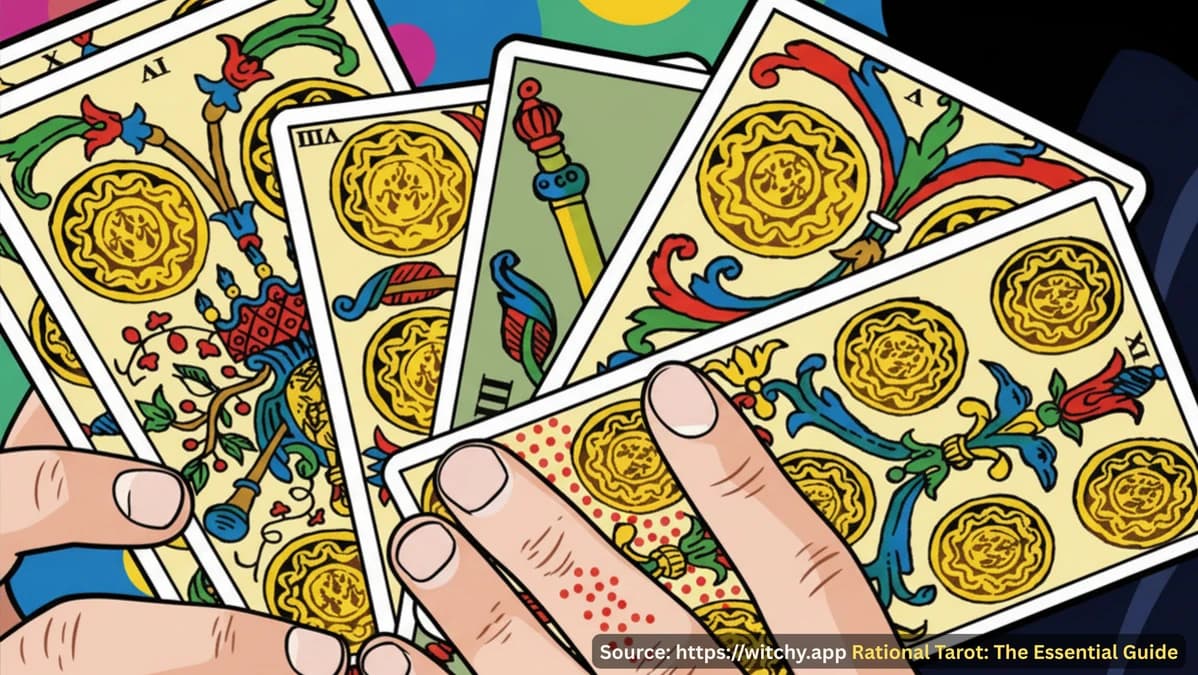
This approach relies on a concept called synchronicity, which Carl Jung described as meaningful coincidences. You see a card, and your brain finds a pattern that relates to your life. This isn't mysticism; it's how humans process information. We look for symbols to make sense of chaos. By using the cards, you force yourself to look at a problem from a new angle. Think of the deck as a set of prompts. If you're stuck on a decision, the cards provide a random variable. This breaks your mental loop. It pushes you to consider a perspective you've ignored. You're not predicting the future. You're analyzing the present with more clarity.
Most people fear that a rational approach strips the wonder away. It actually does the opposite. It puts the power back in your hands. You aren't a passive recipient of fate. You're an active investigator of your own thoughts.
How to use this book
This book isn't a dictionary of meanings. You can find those in any app or guidebook. Instead, this is a manual for critical thinking. I'll show you how to build your own associations and trust your logic. We'll strip away the fluff and focus on how symbols actually trigger memory and emotion.
Start by reading the chapters in order. We'll move from the basic mechanics of the cards to complex spreads. I'll give you exercises to test your intuition against your logic. You'll learn to spot your own cognitive biases, like confirmation bias, where you only see what you want to see in the cards. Don't worry about 'correct' interpretations. There is no secret code. The only meaning that matters is the one that helps you take a productive action in the real world. If a card suggests you're being too stubborn, ask yourself why. Use the cards to ask better questions, not to find easy answers. Keep a journal as you go. Note which cards consistently trigger specific emotions. Over time, you'll build a personal language. This book provides the framework, but you provide the data. Let's get started.