
Chapter 3
The History
From playing cards to printed archetypes in Renaissance France.
Playing cards before tarot
Playing cards didn't start with magic or mysticism. They started as a game. Most historians agree that playing cards traveled from China to the Mamluk Sultanate of Egypt before hitting European shores in the late 1300s. These early Mamluk decks had four suits: coins, cups, swords, and polo sticks. They weren't fancy. They were simple tools for gambling and passing time.
When these cards reached Italy and Spain, Europeans swapped polo sticks for batons or wands. They kept the four-suit structure because it worked. People loved the game. It was fast, portable, and social. There were no 'Major Arcana' yet. There were no hidden meanings or cosmic secrets. You just played the hand you were dealt.
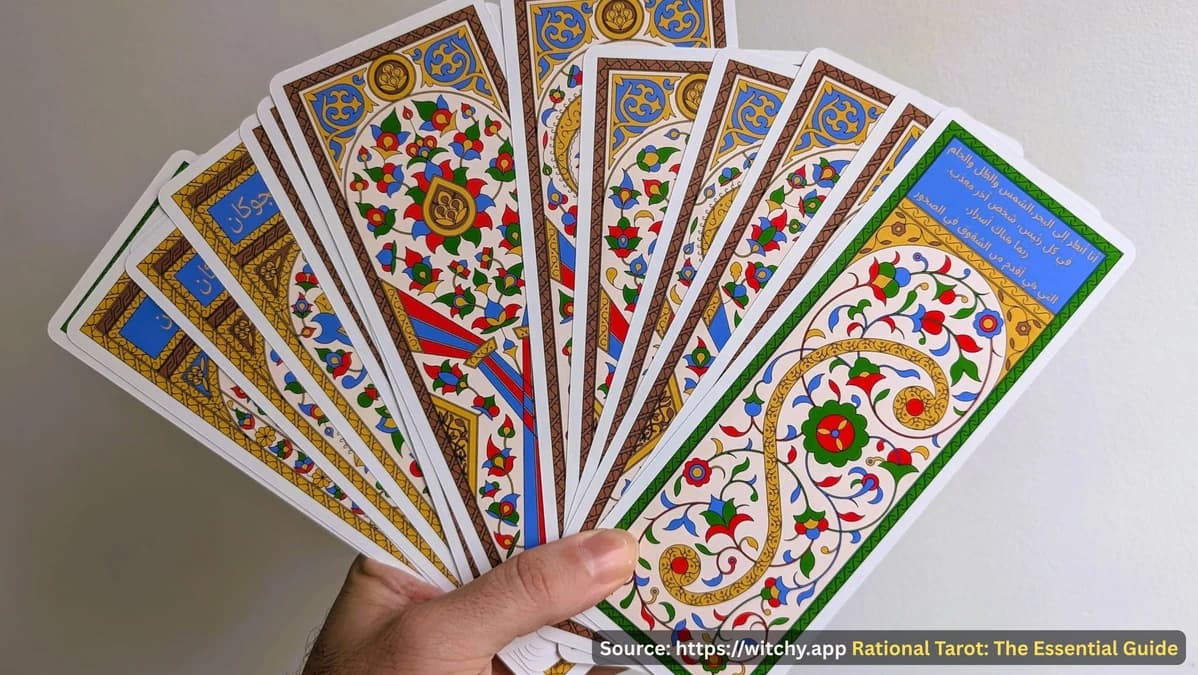
Imagine a crowded tavern in 14th-century Venice. Men are shouting over a game of cards. They aren't looking for spiritual guidance; they're trying to win a few coins. The cards were hand-painted, which meant only the wealthy could afford them. If you were poor, you played with plain cards or didn't play at all. This class divide shaped how cards evolved.
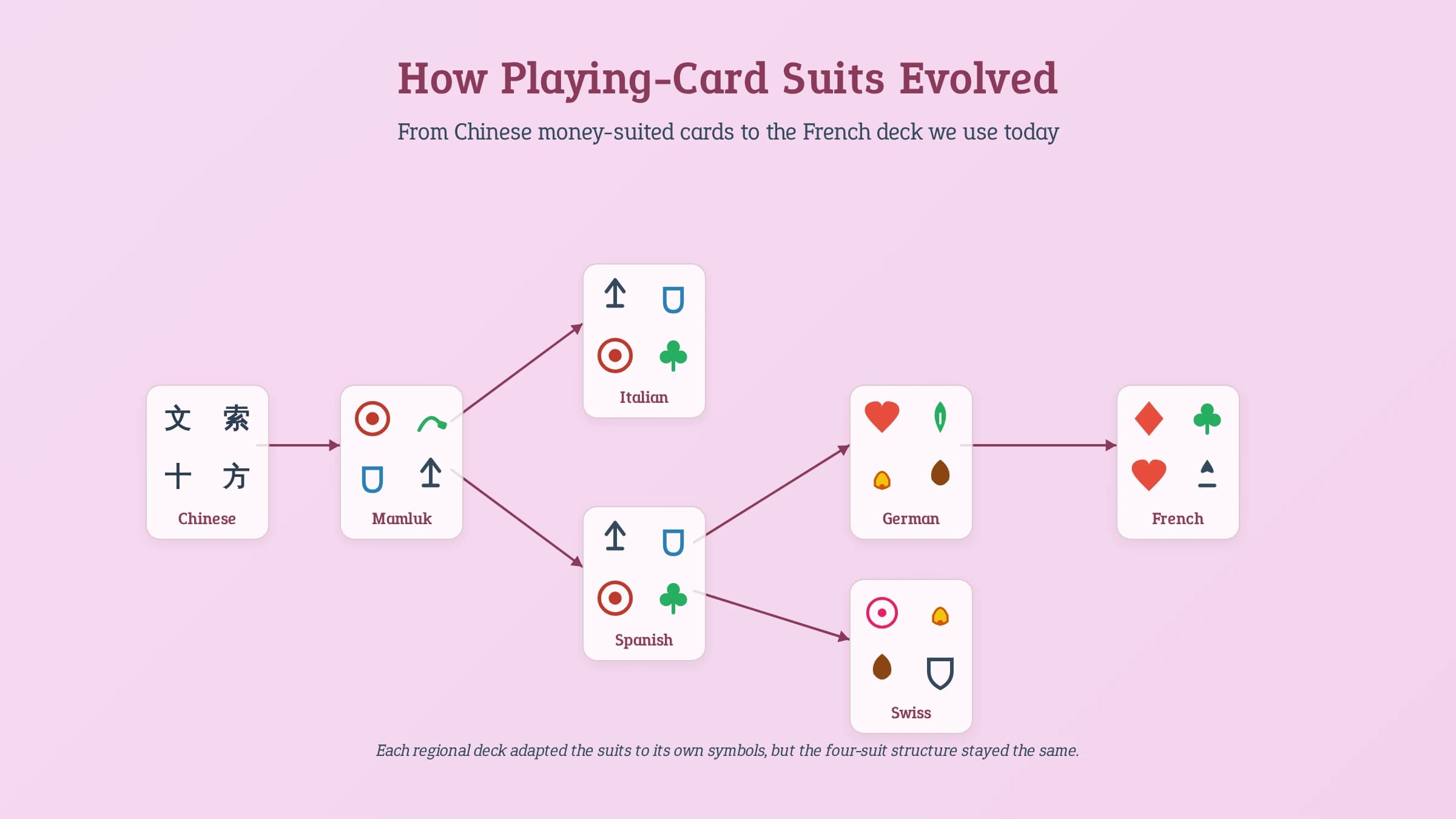
These early games relied on patterns and numbers. The logic was mathematical, not magical. This is the foundation of the 'Rational Tarot.' Before the cards became a mirror for the soul, they were a tool for competition. They functioned on rules, probability, and luck. Understanding this helps us strip away the myths and see the cards as human inventions.
The printing press and a mostly illiterate public
The mid-15th century changed everything. Johannes Gutenberg introduced the printing press, and suddenly, information moved faster. But there was a catch. Most people couldn't read. If you wanted to tell a story or teach a lesson to a crowd that couldn't read a book, you used pictures. Visuals were the universal language of the era. Cards became a form of 'portable art.' They weren't just for games anymore; they were a way to communicate ideas. The printing press allowed for mass production, which drove prices down. Now, the middle class could own a deck. This democratization of imagery meant that symbols—like a crown, a skull, or a wheel—became common shorthand for complex ideas.
Think of these cards as the comic books of the Renaissance. They used archetypes that everyone recognized. A fool was a fool, whether you lived in Milan or Paris. A tower falling down meant disaster. These images didn't need a manual to be understood. They tapped into a shared cultural vocabulary.
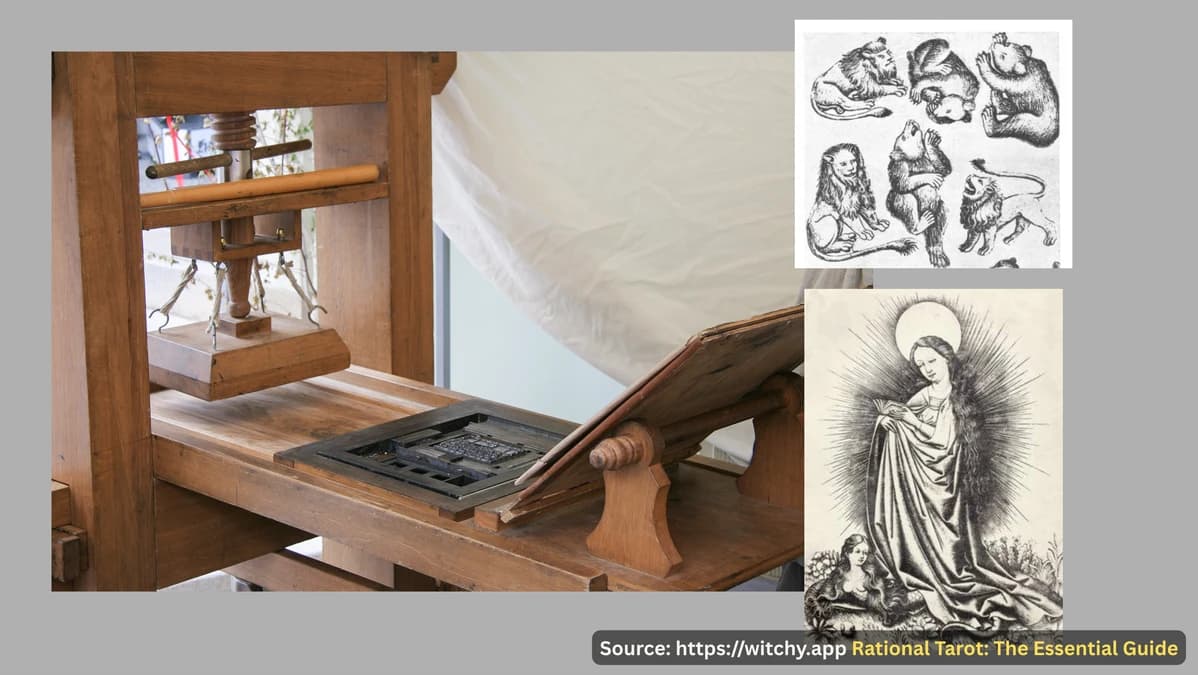
This era proves that humans have always used visual metaphors to process the world. We don't need a mystical tradition to find meaning in a picture. We do it naturally. The printing press didn't create the meaning; it just scaled the delivery system. It turned a private luxury into a public conversation.
Block-printed illustrated cards as mass media
Before high-end engraving, artists used woodblock prints. They carved an image into a piece of wood, inked it, and pressed it onto paper. This process was crude but effective. It created bold, high-contrast images. These block prints weren't just for cards; they were used for religious pamphlets and political satire. They were the first real form of mass media. Because the process was labor-intensive, artists kept the designs simple. They focused on clear silhouettes and recognizable symbols. This is why early tarot cards look so stark. The 'Death' card wasn't a complex gothic painting; it was a skeleton with a scythe. The 'World' was a simple circle. This simplicity is a feature, not a bug. It allows the viewer to project their own meaning onto the image. These cards functioned as a social mirror. They reflected the fears and hopes of the common person. When you see a block-printed card from the 1400s, you're seeing a snapshot of what people thought was important. They valued hierarchy, faith, and the unpredictability of fate. The cards didn't predict the future; they described the present.
We often mistake this simplicity for 'primitive' design. In reality, it was efficient communication. The artists knew their audience. They knew that a single, powerful image could convey more than a page of text. This is the core of why tarot still works today. It bypasses the analytical brain and hits the emotional center through direct visual cues.
Tarot takes shape in France
By the 15th century, the game evolved into 'Tarocchi' in Italy and 'Tarot' in France. The big change was the addition of 'triumph' cards. These were the ancestors of the Major Arcana. They acted as trump cards that could beat any suit. The game became more complex. It required more strategy and better memory. It was still a game, but it had a narrative layer. The Visconti-Sforza decks from Milan are the most famous examples of this era. They were hand-painted for nobility and featured gold leaf. These decks show the transition from simple game pieces to artistic statements. They included figures like the Pope, the Empress, and the Emperor. These weren't occult symbols; they were the power players of the day. They represented the actual social structure of the Renaissance. In France, the game became a national pastime. The 'Tarot de Marseille' emerged as the standard. This deck codified the imagery we still recognize today. It wasn't designed by a secret society or a hidden master. It was designed by printers who wanted to sell decks to the public. They used the most popular images of the time to make the cards appealing.
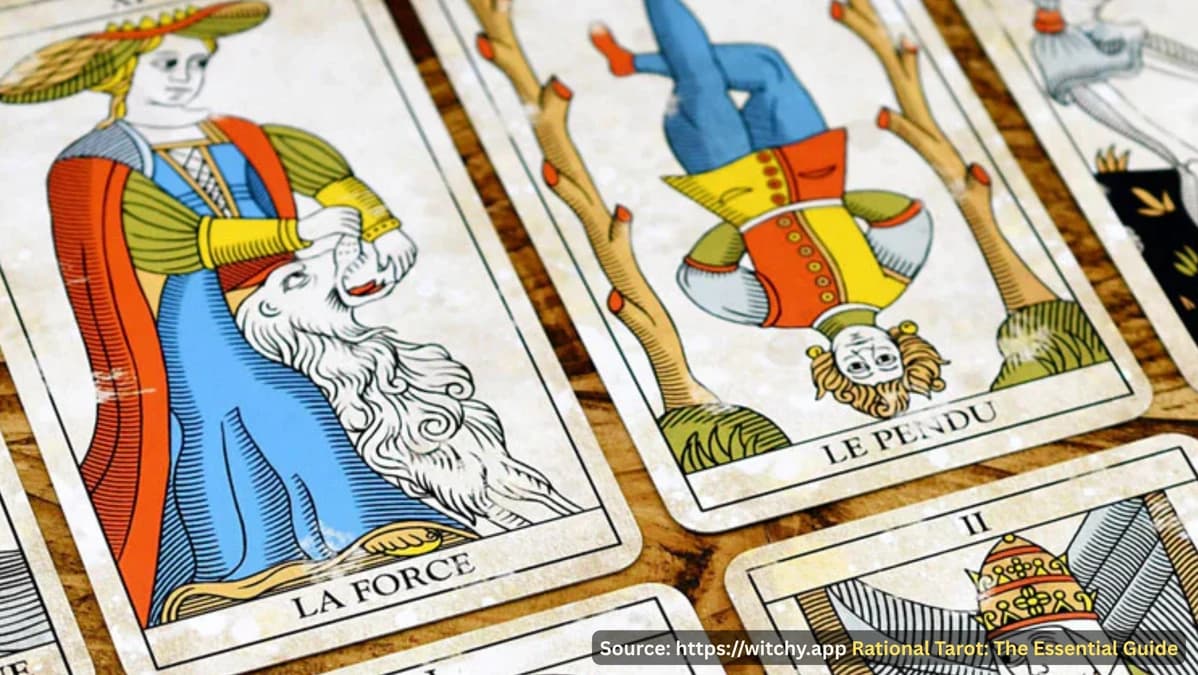
If you look at the Marseille deck, you see a world of trade, religion, and class struggle. The cards are grounded in the physical world. The 'Wheel of Fortune' wasn't a metaphysical concept; it was a literal wheel, a common sight in city squares. The 'Hanged Man' reflected actual punishments of the time. The cards were a map of human experience, not a map of the astral plane.
From card game to divination tool
For centuries, tarot was just a game. Then came the 18th century. In France, a man named Jean-Baptiste Alliette, writing under the name 'Etteilla,' claimed he discovered the 'secret' meaning of the cards. He was the first to market tarot as a tool for divination. He didn't find a secret; he invented a system. He assigned meanings to the cards and created a method for reading them. Etteilla's approach was a brilliant piece of marketing. He tapped into the Enlightenment's obsession with hidden knowledge and the occult. He shifted the cards from the gaming table to the parlor. Suddenly, people weren't playing for money; they were playing for answers. This shift happened because people have always wanted a way to externalize their intuition. The cards provided a structure for that process. Later, in the 19th century, the Occult Revival in England pushed this further. Groups like the Hermetic Order of the Golden Dawn added astrology, alchemy, and Kabbalah to the mix. They turned the cards into a complex philosophical system. This is where the 'mystical' reputation of tarot comes from. They layered centuries of esoteric tradition on top of a simple deck of playing cards. But here's the rational truth: the cards don't have inherent magic. The magic is in the human brain. We are pattern-recognition machines. When we see a card, our brain searches for a connection to our current life. This is called synchronicity or projection. Whether you call it 'divination' or 'psychological priming,' the result is the same. You use the cards to access insights you already have but haven't articulated yet.
Try it
Sources
- Dummett, M. (1980). The Game of Tarot: From Ferrara to Salt Lake City. Duckworth.
- Decker, R., Depaulis, T., & Dummett, M. (1996). A Wicked Pack of Cards: The Origins of the Occult Tarot. St. Martin's Press.
- Hargrave, C. P. (1966). A History of Playing Cards and a Bibliography of Cards and Gaming. Dover Publications. (Original work published 1930).