
Chapter 6
Conclusion
A rational reader's practice, and where to go next.
A rational reader's practice
You've learned that tarot isn't about predicting a fixed future. It's a tool for pattern recognition. When you pull a card, you aren't tapping into a mystical ether. You're using a visual prompt to trigger your own subconscious. This is essentially the 'Forer Effect' in reverse. Instead of believing a vague statement applies to you, you're using a specific image to find a hidden truth in your own mind. Keep your practice grounded. Write down your readings. Check back in a month to see where you were wrong. This feedback loop turns a hobby into a psychological exercise. It keeps you honest. It stops you from twisting the cards to fit a narrative you want to hear.
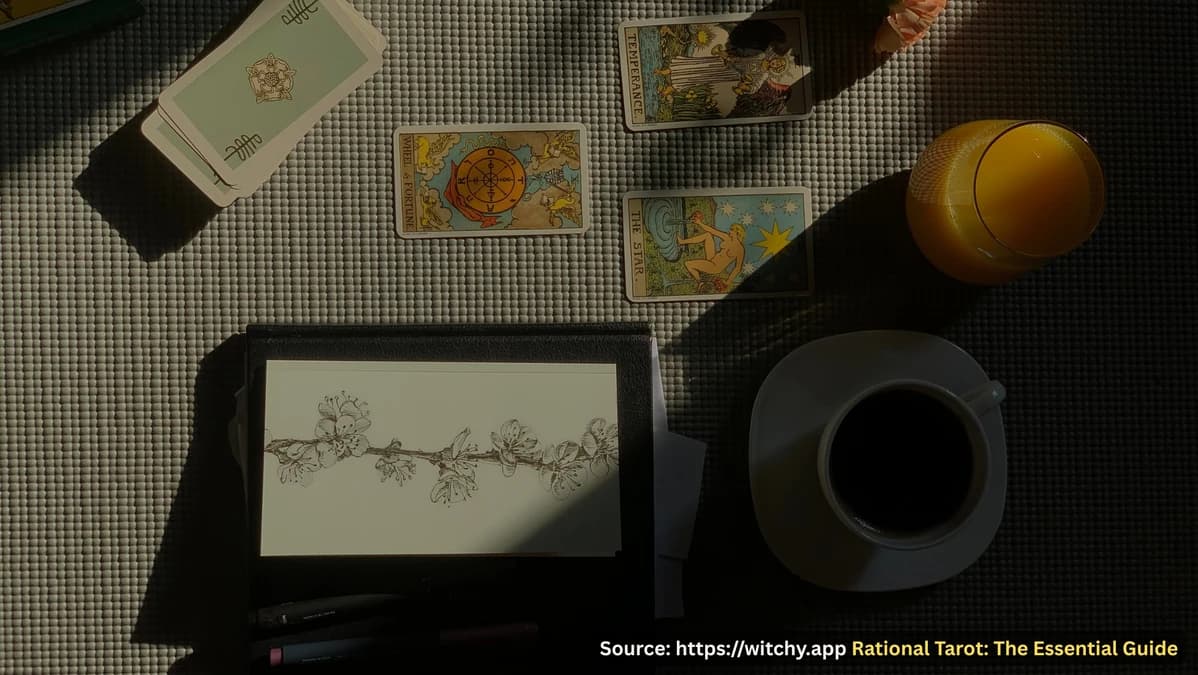
Think of this as a form of active imagination. Carl Jung used similar techniques to explore the unconscious. He believed symbols could bridge the gap between our conscious thoughts and our deeper instincts. When you see a figure walking away in a card, you aren't seeing a literal person. You are seeing your own feeling of abandonment or a need for solitude. Apply this to your daily life. If you pull the Ten of Pentacles, don't just look for a windfall of money. Ask if you feel secure in your family or your legacy. Look for the tension in the image. The gap between the symbol and your reality is where the insight lives. Treat your deck like a mirror, not a crystal ball. If the Three of Swords appears, don't panic about a breakup. Ask why your brain linked that image to your current stress. That's where the real work happens. You're the expert on your own life; the cards are just the catalyst.
Where to go next
Now that you have a rational framework, start experimenting. Try 'blind' readings. Pull a card for a friend without knowing their situation. Notice how your brain tries to fill in the gaps. This teaches you how the mind creates meaning from randomness. It's a lesson in cognitive bias that serves you well outside of tarot. Read more about Carl Jung's theory of synchronicity. He argued that meaningful coincidences aren't random, but they aren't causal either. This gives you an intellectual bridge between the 'magic' of the cards and the reality of the mind. You don't need to believe in fate to find value in the symbols.

Study the history of the Major Arcana. Look at how the symbols evolved from simple playing cards to complex psychological tools. Notice how different cultures interpreted the same image. This shows you that meaning is fluid. It is a choice you make, not a rule you follow. Try a daily "contrast" pull. Draw two cards. One represents your current mood; the other represents a mood you are avoiding. This forces you to acknowledge your blind spots. It turns a simple draw into a mirror for your subconscious. Keep questioning everything. The moment you stop doubting is the moment you stop growing. Use your cards to challenge your assumptions. Use them to argue with yourself. The goal isn't to find the 'right' answer, but to ask a better question. That's the heart of a rational practice.